Two years ago or so, I started thinking about my digital ownership because of something that made me think to myself “Uh! What happened to the internet? What’s up with the over-centralization? Why is everything so shitty?”
If I remember correctly, I was looking at my recurring spending, and realizing how much money I was spending on renting digital services rather than actually owning them. Like, I got a notification from Netflix to warn me that “this movie from your watchlist will soon be unavailable”. Thank you for the heads-up I guess, but… can’t I just watch what I wanna watch when I wanna watch it? Does that mean every digital piece has an expiration date? Let’s say this was strike one.
Then Elon Musk and the Twitter debacle happened. And the final nail, Cory Doctorow published his piece on enshittification.
One of my first decisions was to move away from Google, at least the search engine (I’m still thinking about leaving GMail, Drive, Photos, etc.) to Kagi, a search engine I pay for, but it’s not bothering me with ads. Kagi has a side service called Kagi Small Web, and it got me interested into the “small web” philosophy.
I am old enough to remember what the internet was like in its infancy, and how simple (and wild) most of it was. Google’s first results used to actually give you what you were looking for! And the websites you were reading through were written by passionate people, with the intention to share and spread their interests rather than being all about conversion, engagement, etc. You could stumble upon websites dedicated to super niche hobbies, or subcultures. Some might say that nostalgia is the main driver for the Small Web movement, and I’d say that’s partly true, at least for me. Still, it is my intention to curate this website the way I remember how the web used to be when it was “small”. This is my corner of the web, where I can express myself without worrying about algorithms, or peer pressure.
So, after waving goodbye to Google Search because of its obnoxious sponsored links, I faced another platform trying too hard to get something from me: Wordpress. And I figured it was another good candidate to let go to reclaim my digital life. I never felt comfortable with it anyway, so I did not feel a big miss. The user experience of creating pages, writing articles and basically managing my content felt bloated, and I was under the impression that it was always trying to sell me things that do not align with my intent. Here’s one example:
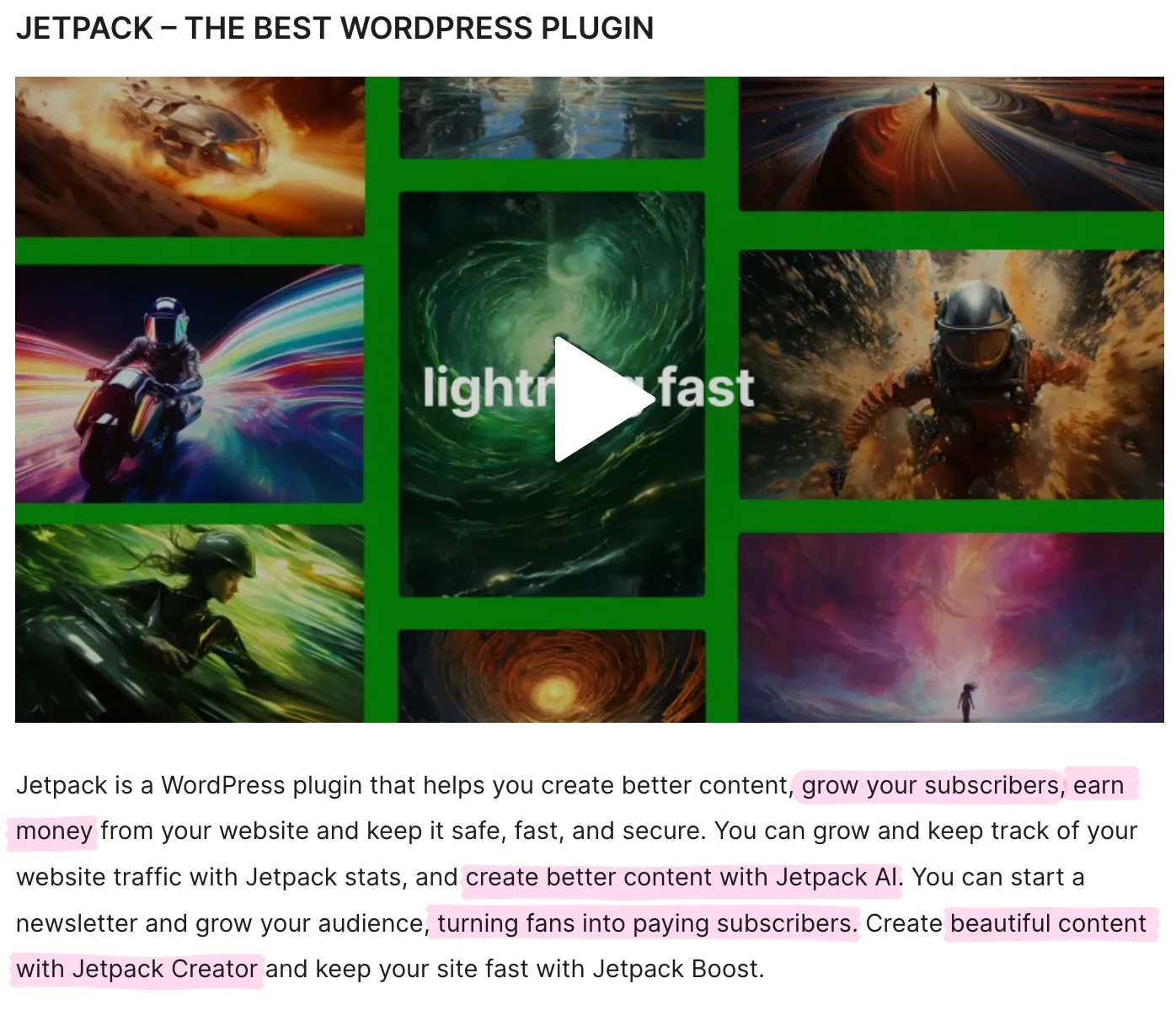
All in all, I feel like WordPress is trying to do everything for everyone, when I want something that does one thing for me.
So, to “own” my workflow I’ve settled on this stack:
- Obsidian is my Content Management System (where I write posts). I used to use Obsidian Publish to host my website at some point (after WordPress), but it was not flexible enough for me. That’s why I ended up using Astro.
- Astro is what I use to build my website.
- GitHub is where my project lives “in the cloud”. Even though I could self-host my whole project on my NAS, I’m not there yet.
- Netlify hosts my website. When I commit my changes to GitHub, Netlify automatically builds my website.
Some of you may think “Well, that seems overly complex when you could simply write a piece on Medium” and you wouldn’t be wrong. But, being involved in the whole process end-to-end brings me something: a feeling of control, a feeling of “owning” what I am doing. Something artisanal, and not industrial. I guess I get that dopamine rush when I’m learning how to tweak CSS or fix an SVG path, rather than hitting thousands of impressions. Does that mean that only tech-savvy people can engage with the Small Web? A couple of years ago, the answer would have been a strong “yes”. Today, the barrier to entry has been considerably lowered. More on that in the second part of this entry!
- What is the Small Web?, by Aral Balkan
- Rediscovering the Small Web, by Parima Satyal
- The Small Web is beautiful, by Ben Hoyt